
Welcome to the International Preparedness Network’s (I.P.N.) Special Programs section, where we highlight unique initiatives designed to equip our members with the skills, resources, and resilience needed to navigate emergencies and disasters effectively.

1. MAX-3: Mastering Physical Fitness for Preparedness. MAX-3 stands for “Mastering Agility, Endurance, and Strength,” a comprehensive three-step physical fitness and health system tailored to prepare individuals for the diverse challenges often encountered during disasters or emergencies. Developed by fitness experts and emergency response professionals, MAX-3 focuses on enhancing agility, building endurance, and cultivating strength to ensure members are physically ready to respond when needed most
Step 1: Agility Training – Improve your mobility, coordination, and speed through specialized exercises and drills aimed at navigating obstacles and unpredictable terrain commonly encountered in emergency situations.
Step 2: Endurance Building – Boost your stamina and cardiovascular health through targeted cardio workouts and endurance training, enabling you to sustain prolonged physical activity during crisis scenarios.
Step 3: Strength Development – Build functional strength and resilience to perform essential tasks such as lifting debris, assisting others, and enduring physically demanding conditions inherent in disaster response efforts.
By participating in MAX-3, I.P.N. members not only enhance their personal fitness levels but also contribute to a collective readiness to effectively respond to emergencies.

2. The Ikhaya-Eco Program: Innovations in Shelter and Sustainability The Ikhaya-Eco (Ikhaya meaning “home” in Zulu) Program is dedicated to addressing emergency and permanent shelter needs through the development of practical, sustainable solutions. It reflects the I.P.N.’s commitment to providing emergency shelters & safe, resilient living spaces for individuals and communities affected by disasters.


Key Components:
- Shelter Innovation: Explore innovative construction techniques, including geodesic domes, Superadobe homes, and ultra-low-cost portable housing designs developed by the I.P.N. These structures offer durability, affordability, and adaptability to diverse environmental conditions, ensuring shelter security for those in need.
- Sustainability Integration: Emphasize eco-friendly practices and materials to minimize environmental impact and promote long-term sustainability in shelter solutions. From renewable energy sources to water harvesting systems, Ikhaya-Eco integrates sustainable technologies to create resilient communities resilient to future crises.
- Emergency Support: Provide essential resources such as emergency food, water, and transportation options to ensure the holistic well-being of individuals and families during crisis situations. By addressing basic needs, the Ikhaya-Eco Program aims to mitigate the immediate impact of disasters and facilitate smoother recovery processes.
3. ia The 21st Century Science Of Life-Defense
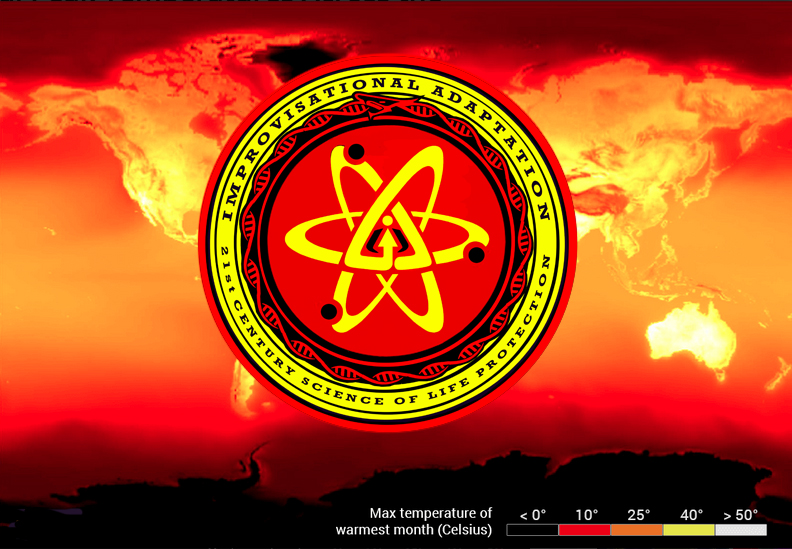
In the early 1990s, Aton Edwards, the Executive Director of the International Preparedness Network (IPN), created a groundbreaking discipline he termed “ia” – shorthand for Improvisational Adaptation. Rooted in his foresight of the multitude of challenges humanity would confront in the 21st century, Edwards crafted ia as a comprehensive amalgamation of diverse disciplines. It merges emergency preparedness and response, outdoor survival (bushcraft), sustainability practices, electronics and mechanics, rural and urban horticulture, non-traditional shelter design and construction, self-defense, and a plethora of trades and STEM-related skills.
Edwards envisioned ia as the quintessential “21st century science of life-defense.” It serves as a holistic toolkit, equipping practitioners with the multifaceted skills necessary to navigate a world increasingly besieged by climate change-related catastrophes, conflicts, pandemics, natural disasters, technological crises, environmental upheavals, and even potential cosmic threats. With an eye towards an uncertain future rife with AI-related challenges and the specter of nuclear, biological, and chemical warfare, Edwards crafted ia to be adaptable, resilient, and comprehensive.
Over the years, Edwards has tirelessly imparted the principles of ia to thousands of civilians and professionals worldwide. Through workshops, seminars, and training sessions, he has empowered individuals with the knowledge and skills vital for survival and resilience in an ever-evolving landscape of threats. Edwards has also disseminated ia through his books, notably “Preparedness NOW!” and the forthcoming “Afroprep-NOW!”, (full breakdown in the conclusion of this section) tailored to address the unique challenges facing the African-American and global Afro-Descendant communities. Through his pioneering work with ia, Edwards continues to revolutionize the field of preparedness, offering a beacon of hope and empowerment in an uncertain world.
4. SURF-6 – I.P.N. Sixth Extinction (Anthropocene Epoch) Survival Initiative

The SURF-6 Initiative & System represents the peak of all our endeavors at the International Preparedness Network, pushing the boundaries of our capabilities and operational protocol ia like never before. This project was conceived to meet the urgent demand for a comprehensive human survival system tailored to equip practitioners with the specialized information and expertise necessary to navigate and overcome the gravest threats to our existence.
Some of these include: Nuclear, chemical, and biological warfare, the looming threat of a pandemic far more severe than COVID-19 unleashed by a hypothetical “Factor-X” virus emerging from the thawing Arctic ice and permafrost that could kill a billion people, cosmic cataclysms, such as colossal coronal mass ejections or solar flares, capable of dismantling electrical grids and communication networks, precipitating widespread chaos, conflict, and famine.
In addition, it also accounts for: Mega disasters called global geophysical events. (GGEs) These are natural phenomena that impact the Earth’s geophysical systems on a global scale. GGE’ s can encompass a wide range of occurrences, from seismic activity like earthquakes and volcanic eruptions to atmospheric phenomena such as hurricanes, cyclones, and extreme weather events like droughts, ARk Storms floods, or heatwaves that have the potential to wreak havoc on the world’s environment, economy, and social fabric.
The SURF-6 Initiative & system offers practical pathways to survival in the face of these existential challenges and beyond. (supervolcano eruption pictured below)

It’s important to note that the SURF-6 system is an academically and physically challenging discipline that requires an unwavering commitment from its participants. For those who dare to embrace its rigors, SURF-6 will equip them with the tools and expertise to confront almost any conceivable threat with unwavering confidence; because as the initiative’s name and program creator Aton Edwards suggests, “it provides you with the tools to ride the approaching tidal wave of deadly challenges, rather than being drowned by them”
Finally, In stark contrast to the paramilitary vibes often associated with traditional prepping/survivalist movements, SURF-6 transcends mere emergency preparedness to cultivate a culture rooted in a value system that emphasizes embracing humanity’s best qualities such as altruism, kindness, generosity while building the strength to safeguard those principals during the worst of times. SURF-6 offers more than just a roadmap for navigating apocalyptic scenarios—it fosters a way of life.


